


Retirement Isn’t an End: It’s a Vision Shift
For high-net-worth individuals, retirement is less about “having enough” and more about knowing what comes next and how your wealth can support it.
The transition from career to retirement isn’t a closing chapter. It’s the beginning of a life stage that calls for reflection, intentional design, and strategic alignment between your vision and wealth.
This phase of life often brings up questions like:
- What energizes you?
- How do you want to spend your time?
- How can your wealth serve more than just your financial needs?
These are the questions that shape a retirement strategy that goes beyond just the numbers.
Designing the Life You Want to Lead
A meaningful retirement plan doesn’t start with numbers. It starts with you and what matters most in this next chapter. That might be time with family, supporting a cause close to your heart, travel that feeds your spirit, or simply having space to explore what’s next.
Once there’s clarity around what fulfills you, your wealth strategy can follow. Whether it’s maintaining multiple homes, contributing to a community you care about, or helping loved ones thrive, your lifestyle choices will guide how that strategy takes shape and supports the life you want to lead.
Consider how elements like these could shape your overall plan:
- Maintaining more than one home
- Supporting adult children or family members
- Funding personal projects or philanthropic initiatives
This stage is also where flexibility meets design. Your vision may evolve, and your plan should be built to adjust with it.
"Clarity around your values brings confidence to your wealth strategy."
Family Legacy: Balancing Personal Goals With Generational Impact
For many individuals, retirement planning means more than preparing for your future; it's also about creating opportunities for others.
Should you pass wealth now, or later? Should your children be involved in planning? Is your legacy about financial transfer, or shared values?
There’s often a creative tension between what you want to enjoy and what you want to pass on. Strategic planning helps resolve that tension – whether that means defining your legacy through charitable giving, supporting loved ones during your lifetime, or building an estate structure that reflects your values.
Exploring Tradeoffs That Shape Your Retirement
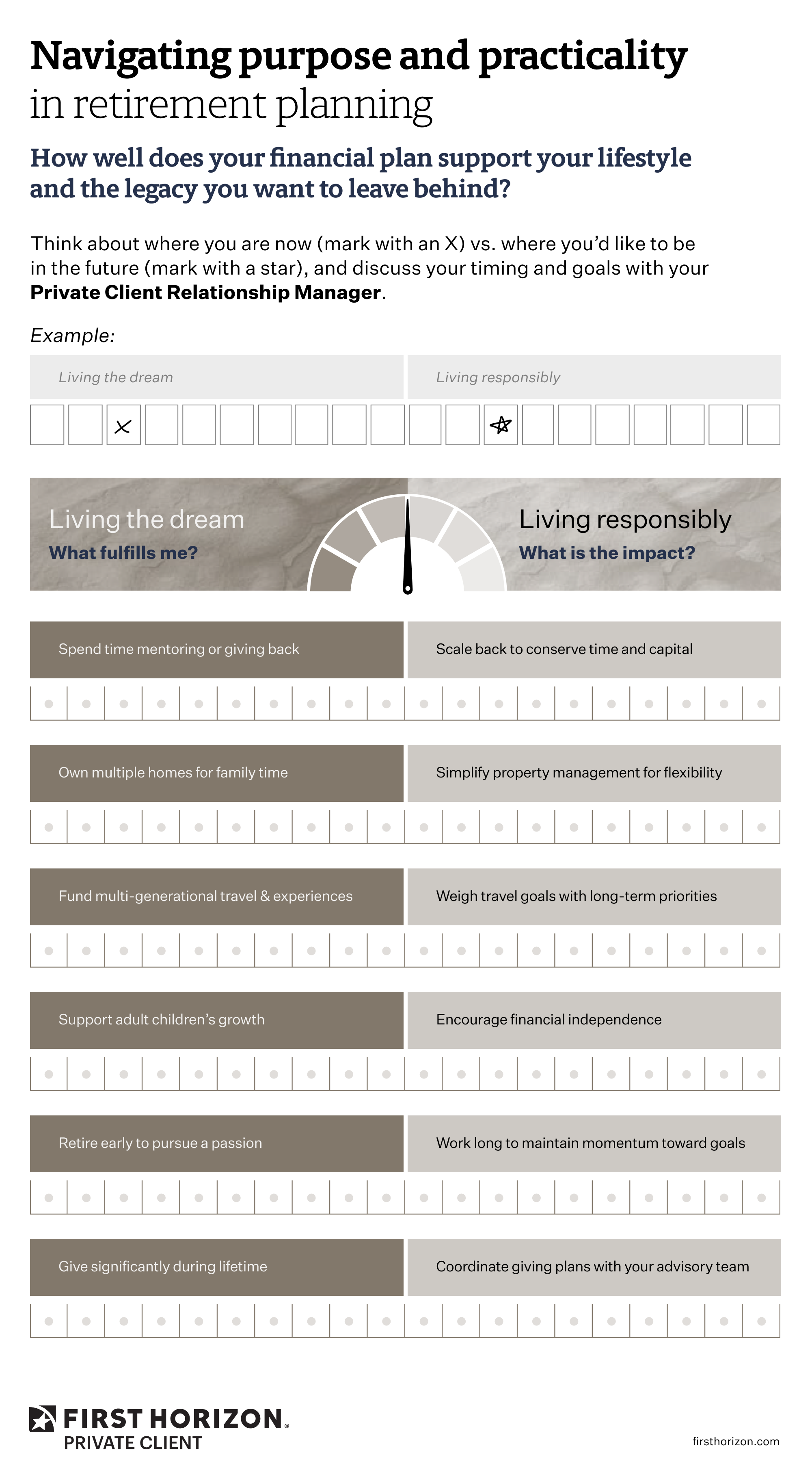
As you begin to define the life you want in retirement, you’ll likely find moments where your personal aspirations and financial realities intersect, or even compete. The visual below offers a framework to reflect on where you are today, where you want to be, and how your financial strategy can support both.
Purpose-Driven Retirement: Giving as a Guiding Force
When your financial needs are met, giving becomes more than a line item; it becomes a purpose. Whether you’re supporting causes you care about, mentoring future leaders, or helping a family member launch a business, philanthropy can anchor this next chapter.
The goal here isn’t about technical tools or financial vehicles. It’s about meaning.
- What does giving represent to you?
- What kind of impact do you want to have?
- And how does that generosity shape your larger retirement story?
Staying Agile: Building Flexibility Into the Plan
Retirement doesn’t always go according to plan. Life changes, markets shift, and opportunities arise. That’s why flexibility is a strategic asset.
That’s also why it’s helpful to build in room to adapt, so your plan can grow with you. Examples of ways some families maintain flexibility include:
- Mapping out different what-if scenarios
- Keeping flexible reserves for the unexpected
- Adjusting your income strategy as life unfolds
- Setting regular check-ins to keep everything aligned
While it’s impossible to predict every turn, a plan with room to adjust can help you stay confident through change. You can explore your own preparedness with our Retirement Readiness Quiz.
Retirement Flexibility Questions
The examples below are for informational purposes only and do not represent individualized financial advice.
Q: What does a flexible retirement plan include?
A: It may include multiple withdrawal paths, liquidity reserves, location flexibility, and regular strategy reviews.
Q: Why is flexibility important in high-net-worth retirement planning?
A: Because life doesn’t always go as expected. Flexibility allows you to respond to changing tax rules, family needs, market shifts, or health considerations without compromising long-term goals.
Q: How often should I revisit my retirement plan?
A: Many people revisit their plans each year, or sooner if their situation changes, helping ensure they stay aligned with their goals.
Design a Retirement That Works for You
Retirement is personal. And when your vision aligns with your wealth strategy, it becomes powerful.
Whether you're refining your lifestyle goals, thinking through legacy planning, or simply seeking clarity, the right conversation can help move you forward.
